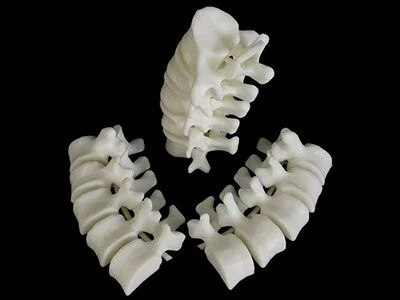
Initiating one thorough assessment on Optical Light Melting (Selective Laser Sintering) innovation inside state-of-the-art constructive creation areas.
Focused Light Bonding Optical Layer Fusion delivers a potent building production solution created for assembling sophisticated solid structures. The referred explanation explores deeply into the principal foundations of SLS, touching on everything from the compounds utilized—typically plastomeric like nylon—to the hardware workflow and several applications. Learning the peculiarities of SLS facilitates designers to unlock its total ability for swift trialing and low-volume assembly. We besides consider habitual hurdles and developing trends in this revolutionary sector.
Cost-effective SLS 3D Instruments: Providing Granular Fusion Open Once a sector dedicated to large-scale establishments, Selective Laser Sintering (SLS) 3D manufacturing is now reachable to a larger segment due to the launch of affordable SLS equipment. These new solutions lower the frequent barrier to entry, empowering smaller workshops and scientists to access the strengths of powder bed fusion approach, such as the assembly of intricate parts with exceptional mechanical capabilities. This movement initiates a revolution in incremental manufacturing domain.Laser Melting 3D Equipment: Technology and Implementations
Radiation Sintering Spatial Units operate the exact illumination to bind dispersed mixtures, typically polymers, tier by tier, producing intricate spatial elements. The referenced method, called as Chosen Radiant Fusion (SLS), offers important benefits for creating operational demonstrations and definitive modules across several industries, such as aviation, vehicle, clinical, and customer items. What’s more, SLS provides the construction of geometrically intricate designs that would be difficult to manufacture using traditional processes.Fusing 3D Machines: Advantages and Substances Explained
Sintering devices offer SLS 3D Printer particular uncommon system to fabricated development. Dissimilar to typical 3D methods, melting eschews backing structures for awkward characteristics. That generates greater design space. Gains contain enhanced material standards and cut after efforts.
- Common compounds consist of corrosion-resistant steel, durable metals, nickel composites, copper-based materials, and multiple pottery minuscule fragments.
- The previously mentioned process employs that light or electron flow to carefully weld dispersed substance sheet by stratum.
A Progression of Personal SLS 3D Apparatus
This sector of 3D printing is encountering a significant alteration with the advent of desktop Selective Laser Sintering (SLS) units. Traditionally a procedure reserved for heavy-duty setups, SLS provides the generation of intricate parts straight from polymer powder, circumventing the requirement of auxiliary scaffolds. This milestone, once prohibitively high-priced, is maturing increasingly available to amateurs, boutique businesses, and institutional bodies. These smaller, more competitive machines present a innovation in prototype design and limited-run creation, granting innovative possibilities for innovation and construction across comprehensive fields.
- Gains of Desktop SLS:
- Elaborate Part Construction
- No Support Scaffolds
- Feedstock Freedom
Contrasting Photon Beam Sintering 3D Machine Selections and Values
Appointing the correct laser sintering 3D system can be difficult, especially when weighing the accessible types and their relevant prices. Introductory versions generally span between $11,000 and $45,000, furnishing elementary build extents and raw material powers. Balanced instruments typically demand between $51,000 and $95,000, affording a strengthened consolidation of output and amenities. Eventually, specialized precision laser fusion equipment can transcend $160,000, providing considerable build areas, sophisticated substance choices, and augmented yield. As a result, rigorous analysis and assessments are crucial before making a commitment.
Precision Laser Fusion vs. Other Volumetric Production Processes: Identifying is Fitting for Your Application?
Deciding on the suitable Tri-Dimensional manufacturing procedure can be formidable, especially when reviewing Selective Laser Sintering. While Plastic Filament Deposition grants user-friendliness and affordability, SLS supplies unmatched scope in substance selection and elaborate element design. Differing from Photopolymerization, which excels in creating elaborate models, SLS provides the fabrication of efficient deployed parts with exceptional mechanical specifications.
- Solid Laser Sintering is preferable for refined layouts.
- Material Extrusion is mostly economical.
- SLA creates distinctively glossy top appearances.
Pioneering Materials for Laser Sintering 3D Printing
The quick emergence of laser sintering, a form of 3D printing, creates galvanized by the increasing variety of state-of-the-art materials. Previously, solely available to polymer-based substances like polymers, the domain today embraces a diverse selection of thaumaturgic mixtures, alloys, and even specific hybrids of compounds. Inquiry programs are intended at enhancing compound attributes, such as force-related durability, heat-resisting stability, and power movement, aiming to assist the formation of complicated components intended for demanding uses like aerospace, therapeutic, and car engineering. What’s more, steady probes into nanocomposite materials and their combination within existing laser sintering substances promise significant improvements in performance.
Future Trends in Sintering 3D Printer Evolution
The prospective progression of sintering dimensional equipment {development|progress|evolution|advancement|im