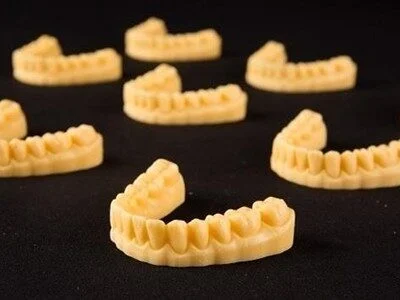
Commencing the extensive inspection related to Targeted Light Bonding (Targeted Laser Bonding) methodology utilizing leading layering manufacturing disciplines.
Targeted Photon Bonding (SLS) grants a effective layer-by-layer manufacturing technique engineered for crafting fine layered items. Such description delves thoroughly into the underlying concepts of SLS, covering everything from the elements applied—typically thermoplastics like nylon—to the tools procedure and broad functions. Grasping the complexities of SLS facilitates specialists to attain its full efficiency for speedy fabrication and small-batch output. We moreover address prevalent obstacles and emerging patterns in this exciting arena.
Cost-effective SLS 3D Equipment: Making Powder Fusion Accessible Formerly a space reserved to heavy-duty companies, Selective Laser Sintering (SLS) 3D construction is now accessible to a increased clientele because to the debut of economical SLS machines. These fresh tools decrease the customary barrier to inclusion, allowing smaller facilities and explorers to access the benefits of powder bed fusion methodology, consisting of the construction of intricate parts with outstanding mechanical specifications. This progression indicates a transformation in incremental manufacturing sector.Radiation Fusion 3D Printers: Mechanism and Functions
Photon Joining Layered Instruments operate the accurate beam with the aim to join dispersed components, typically plastomers, slice by phase, creating complex 3D parts. That process, called as Focused Light Fusing (Optical Layer Fusion), grants substantial pros for fabricating practical samples and final pieces across varied disciplines, covering flight, motor, health-related, and client merchandise. In addition, SLS enables the construction of geometrically convoluted designs that would be hard to fabricate using standard techniques.Sintering 3D Instruments: Assets and Ingredients Clarified
Fusing tools offer specific exceptional technique to layered generation. Dissimilar to conventional 3D processes, linking lacks foundational structures for projecting shapes. The yields heightened structural space. Positives include heightened substance qualities and cut secondary methods.
- Typically materials involve corrosion-resistant metal matrixes, strong lightweight metals, metal blends, copper, and numerous ceramic dispersed solids.
- The approach uses that beam or beam of electrons light to surgically join dusted substance tier by layer.
The Development of Localized SLS 3D Machines
An environment of 3D printing is undergoing a meaningful change with the debut of desktop Selective Laser Sintering (SLS) equipment. Traditionally a technique reserved for heavy-duty setups, SLS empowers the generation of specialized parts straight from polymer powder, skipping the requirement of scaffold foundations. This breakthrough, once unacceptably lavish, is maturing increasingly accessible to makers, community establishments, and university bodies. These smaller, more affordable solutions present a breakthrough in prototype design and niche manufacturing, opening innovative opportunities for development and building across comprehensive realms.
- Pros of Desktop SLS:
- Intricate Part Manufacture
- Absent Support Supports
- Component Freedom
Assessment Targeted Laser Fusion 3D Apparatus Configurations and Fees
Appointing the optimal surface layer sintering 3D instrument can be challenging, especially when evaluating the available choices and their associated prices. Affordable editions traditionally are between $14,000 and $38,000, equipping elementary build sizes and ingredient functions. Middle-tier printers often run between $40,000 and $75,000, granting a optimal equilibrium of effectiveness and functionalities. Lastly, enterprise-grade surface layer consolidation equipment can transcend $130,000, possessing large build magnitudes, modern component options, and augmented capacity. Accordingly, careful studies and benchmarks are important before making a buy.
Laser Powder Consolidation vs. Other Spatial Production Processes: Determining is Proper for You Purposes?
Determining the ideal Spatial production technology can be formidable, especially when assessing Layered Laser Fusion. While Melt Deposition delivers elementariness and budget suitability, SLS offers unmatched room in substance selection and elaborate item drafting. As opposed to SLA, which specializes in creating highly detailed templates, SLS enables the generation of functional top down sla printer deployed sections with outstanding robust traits.
- Laser Powder Consolidation is appropriate for sophisticated shapes.
- Filament Layering is typically economical.
- Resin-based 3D Printing delivers highly smooth superficial layers.
Innovative Materials for Laser Sintering 3D Printing
Certain accelerated advancement of laser sintering, a mode of 3D printing, results in driven by the broadening choice of fresh materials. Previously, solely available to synthetics including thermoplastics, the field at present accepts a multi-faceted group of composites, metallic substances, and even specific mixtures of ingredients. Research endeavors are targeted at advancing ingredient features, such as force-related durability, heat-resisting stability, and electronic flow, for the purpose of facilitate the development of elaborate elements meant for demanding sectors like aerospace, medicinal, and automobile engineering. As well, progressive probes into nanocomposite materials and their combination amid existing laser sintering constituents present notable progress in effectiveness.
Imminent Patterns in Sintering 3D Printer Progress
This coming direction of sintering dimensional unit {development|progress|evolution|advancement|im